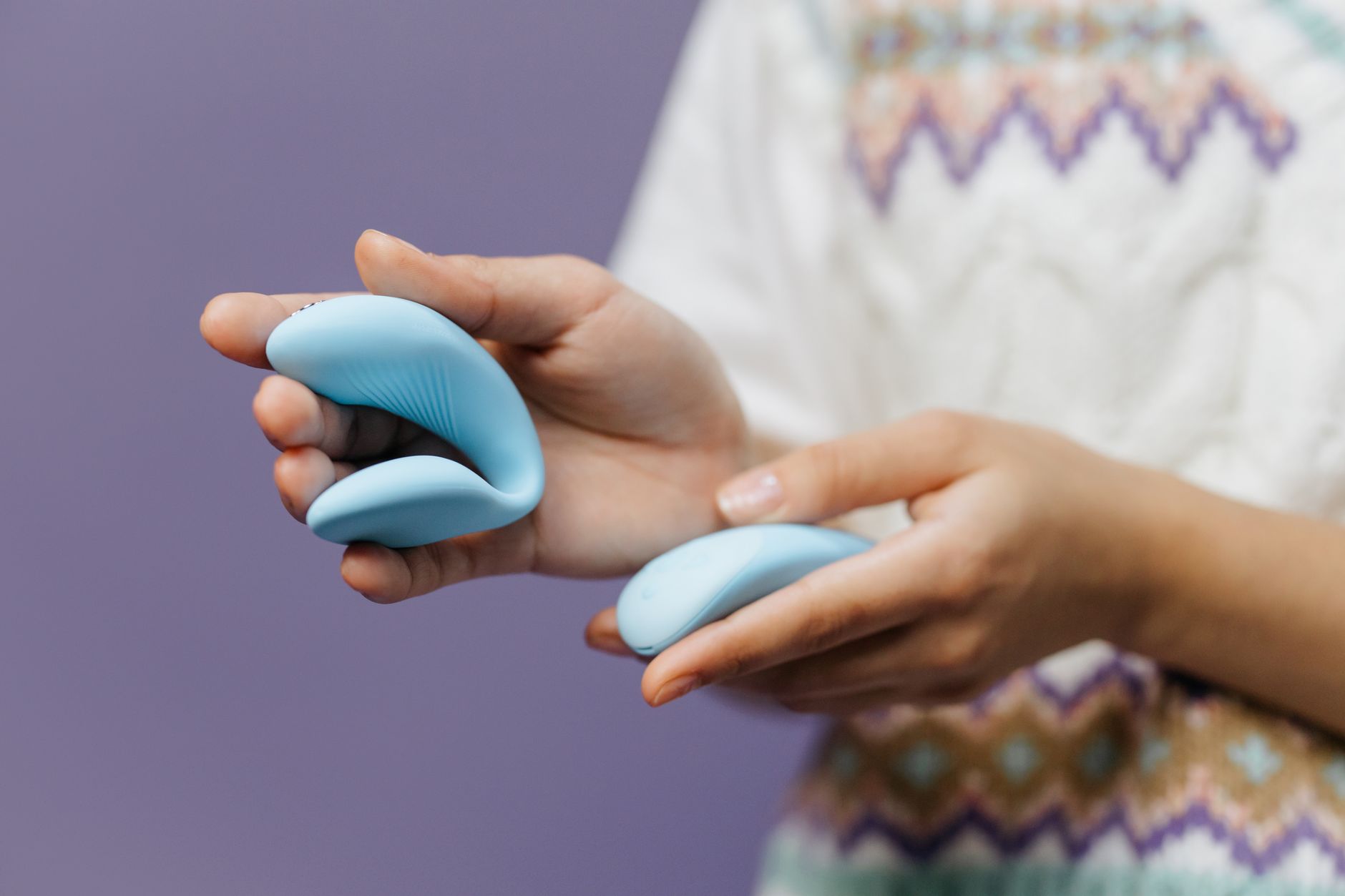
Here's the thing about disconnection
You're not broken. Your body isn't punishing you. What's happening is that your nervous system has learned to protect itself by checking out. Dissociation, depersonalization, feeling like you're watching yourself from outside your body. These are real survival responses. They show up most clearly when you try to be intimate because that's when you're supposed to be present in sensation. And if your system decided presence isn't safe, it shuts down.
The problem is that pleasure lives in presence. You can't feel it from a distance. So when your body goes numb or distant, arousal dies. And then you feel broken. But reconnection is learnable. It's not magical. It's a practice.
A lemon vibrator can be a powerful tool in that practice because it gives your nervous system permission to notice small sensations without demanding full vulnerability all at once.
Why dissociation kills arousal (the neuroscience part, made simple)
When you're dissociated, your prefrontal cortex (the part that feels and decides) takes a backseat. Your amygdala (the alarm system) is driving. That's useful if there's actual danger. It's useless if you're trying to come.
Arousal requires what's called vagal tone. That's your vagus nerve's ability to shift between your sympathetic nervous system (fight or flight) and parasympathetic system (rest and digest). When you're dissociated, you're stuck in a middle ground. Not fully activated, not fully calm. Just absent.
A lemon vibrator works because it creates a stimulus that's strong enough to pull your attention back into your body, but gentle enough (compared to penetration, for example) that it doesn't override your nervous system. The suction sensation from a device like the Lem is different from traditional vibration. It's less about speed and more about pressure, which means it activates different nerve pathways. Those pathways can feel less threatening to a nervous system in recovery.
The reconnection protocol: how to actually use this
Start with no expectation of arousal. That's crucial. You're not trying to orgasm. You're trying to notice sensation. These are completely different goals.
Step one: build safety first. Before you use the lemon vibrator, spend a week (or two, or three) just noticing your body without any pressure. This might sound boring. It's not. Lie down. Notice where you feel held by the bed. Notice your breath. Move your fingers across your forearm and notice the texture. The point is to show your nervous system that noticing sensation is safe, and you're not going anywhere. No goal. Just presence.
Step two: warm up with touch. When you're ready to introduce the lemon vibrator, don't start with it immediately. Use your hands first. Touch your forearms, your collarbone, your inner thighs. Notice what feels neutral, what feels good, what feels too much. This takes the pressure off the vibrator to be The Thing That Works. It's just one tool in a bigger process.
Step three: use the vibrator on low settings, not on the clitoris first. Start on your inner thigh or labia with the lemon vibrator on the lowest setting. Notice the sensation. Does it feel tingly? Electric? Numb? All of those are fine. You're gathering information about what your body can feel right now. If you notice you're checking out, stop. Come back to your hands. Try again tomorrow.
Step four: move to the clitoris only when you've felt five to ten minutes of continuous sensation elsewhere. Your clitoris is sensitive and has a lot of nerve density. If you start there when you're dissociated, it can feel overwhelming or numb, which reinforces the feeling of disconnection. Build some momentum in less sensitive tissue first.
Step five: use the pattern function to anchor attention. The Lem and other modern lemon clitoral vibrators have multiple patterns. Find one that feels interesting but not overwhelming. Set a timer for eight minutes. Your only job is to notice three things: the pressure, the rhythm, and your breath. That's it. When your mind wanders (it will), gently bring it back. This is meditation. Pleasure might come. It might not. You're building the skill of staying present.
The emotional layer (which matters more than the technique)
Disconnection often has a story. Maybe your body didn't feel safe at some point. Maybe you've been through something that made presence feel dangerous. Maybe you just spent ten years focused on work or kids and forgot how to inhabit yourself. Whatever it is, reconnecting to pleasure requires some grief work.
This is where a partner can help, or where talking to a therapist matters. You can use the lemon vibrator perfectly correctly and still feel stuck if part of you has decided that feeling good is not allowed. That sounds dramatic, but it's real. Shame lives in the body. So does safety.
When you use the vibrator, notice if thoughts come up. "I'm too old for this." "I should be able to do this alone." "Something's wrong with me." Don't fight them. Name them. Say them out loud. Your nervous system responds to language. Telling yourself "I'm learning to be present again" is different from "I'm broken and numb." One activates shame. One activates growth.
When to bring a partner in (or when to wait)
If you're in a relationship, your partner's presence can accelerate reconnection, but only if they understand what's happening. The worst scenario is your partner thinking your disconnection is about them. It's not. It's about your nervous system needing to rebuild trust in sensation.
If you decide to bring your partner into this process, here's a guide on how to introduce a lemon vibrator when you're with someone new. But honestly, starting alone is often better. You get to discover what your body actually feels like without performing or managing your partner's reaction.
When you do bring them in, let them watch. Have them use their hands on other parts of your body while you use the vibrator. Combine sensations. The point is to show your nervous system that being present is safe even with someone else in the room. That takes time.
The reality of progress
Reconnection isn't linear. Some days the vibrator will feel amazing. Some days your body will go quiet again. That's not failure. That's your nervous system practicing different settings. Keep going.
You might find that progress shows up in weird places first. You'll notice you can feel your feet in your shoes. You'll realize you're not spacing out during conversation. You'll have a moment where you're genuinely present during something mundane. Then one day you'll realize that when you use the lemon vibrator, your body feels like it belongs to you again.
That's not a small thing. That's the whole point.
FAQ: Your questions answered
How long does it take to reconnect with your body using a lemon vibrator?
There's no fixed timeline. Some people feel a shift in two weeks. Others take two months. It depends on how long you've been dissociated and what caused it. Think of it like physical therapy. You're retraining your nervous system. That takes repetition. Use the lemon vibrator at least three times a week if you can. Consistency matters more than intensity.
Can dissociation during sex be fixed with just a vibrator alone?
A vibrator is a tool, not a cure. It helps you practice presence. But if dissociation is severe or tied to trauma, you'll also benefit from working with a therapist. A good trauma-informed therapist (especially one trained in somatic techniques) can help your nervous system understand that you're safe. The lemon vibrator is the practice between sessions.
What if the lemon vibrator makes me feel more numb?
Stop and try again another day. Your nervous system might not be ready for that level of stimulation yet. Go back to hand touch for a while. Build up slower. There's no shame in pacing. Also consider that numbness itself is data. It's your system telling you something about what it needs. Listen to that. Pushing through numbness doesn't build reconnection. It builds more dissociation.
Is it normal to feel emotional when using a vibrator while reconnecting?
Completely normal. Sensation and emotion are stored together in the body. When you start feeling your body again, emotions come up. You might feel sadness, anger, grief. You might cry. That's not a sign something's wrong. That's a sign you're thawing. Let it happen. Emotions are just information.
Can I use a lemon clitoral vibrator if I have trauma?
Yes, but slowly and with professional support. Trauma changes how your nervous system responds to sensation. A device like the Lem can help because the suction pressure is different from traditional vibration, but your system will need time to recognize that this sensation is safe. Work with a trauma-informed therapist while you're rebuilding.
What's the difference between dissociation and low libido?
Low libido is about desire. Dissociation is about presence. You can have both, or just one. With low libido, you might think about sex but feel no urge. With dissociation, you might be physically aroused but feel completely absent from the experience. They need different approaches. A lemon vibrator helps dissociation by rebuilding presence. Low libido usually needs more support around desire, connection, and sometimes hormone work.
The bottom line
Your body isn't the problem. The disconnection is a feature, not a bug. Your nervous system learned to protect you by going absent. Reconnection means teaching it that presence is safe again. A lemon vibrator can be part of that learning. But it's not about the vibrator. It's about you, over time, deciding that feeling your body again matters. That's where the healing lives.