
Let's talk about the fear that doesn't get named
You want to bring a lemon vibrator into your relationship. Your partner hears that and thinks: "She doesn't find me attractive enough." Or worse, "I'm going to be replaced." Suddenly the conversation isn't about pleasure. It's about whether they're enough.
This dynamic plays out in so many couples, and it's rarely about the toy itself. It's about what the toy represents in your partner's mind. Before you even unbox a lem vibrator, you need to understand that fear.
What your partner is actually worried about
When someone feels threatened by the introduction of a sexual toy, they're almost always processing one of three underlying fears.
Fear one: inadequacy. Your partner believes their body, touch, or effort should be sufficient to satisfy you. A vibrator, in their mind, proves otherwise. This is especially strong for people socialized to believe their role is to be the sole source of their partner's pleasure.
Fear two: being phased out. They worry that once you discover what a lemon vibrator can do, you'll prefer it to them. Sex will become something you do alone, with the toy, and they'll become irrelevant.
Fear three: judgment. They may worry that wanting to use toys together means you're bored, unhappy in the relationship, or want something they can't provide. Some partners also fear being judged themselves for wanting to incorporate toys.
None of these fears are logical, but they're real. And logic won't fix them. What will is honest conversation and a deliberate introduction that proves the toy is about connection, not replacement.
The conversation before the toy arrives
Don't surprise your partner with a box of lemon sexual toys or any adult toy. That's a trust violation, even if you meant it kindly.
Instead, choose a calm moment outside the bedroom. Not during sex, not during conflict, not when you're rushed. Open with something like: "I've been thinking about our sex life, and I want us to feel more connected. There's something I'd like to try together."
Then explain what a lemon vibrator actually does. Be specific and unsexy about it. You might say something like: "Clitoral vibrators like the Lem work in a way that my body responds to really well. It's not about replacing you. It's that my nervous system processes that kind of stimulation in a way that helps me relax and enjoy sensation more. I'd love to explore that together with you."
The key phrase here is "with you." A lemon vibrator isn't something you do instead of your partner. It's something you incorporate while your partner is present, engaged, and involved.
Then ask directly: "What worries you about this?" Let them name the fear. Don't argue with it. If they say, "I'm worried you'll like it more than me," resist the urge to say, "That's ridiculous." Instead: "I get why that feels scary. That's not what this is about for me. Can I show you how I'm thinking about this?"
How to physically introduce a lemon vibrator so it feels like togetherness
First time with your partner present should not be solo. That defeats the entire purpose.
Start with foreplay as you normally would. Touch, kissing, whatever gets you both engaged. Then, when you're already aroused and comfortable, introduce the toy.
You might say: "I'd like to use this now. Do you want to watch, or do you want to help me use it?" Giving your partner agency matters. Some partners will feel more secure watching and learning. Others will feel more connected by being the one to hold it or move it.
If they're holding or guiding the toy, they're literally the one creating the sensation. They're not watching from the sidelines. They're part of the action. This reframes the entire experience from "her and the toy" to "us and the tool."
Start on a low setting if you're using a lemon clitoral vibrator like the Lem. You want your partner to see how your body responds, hear your sounds of pleasure, feel you moving toward them. Make the experience visible and audible. Don't go quiet or turn away. That silence reads as embarrassment or disconnection.
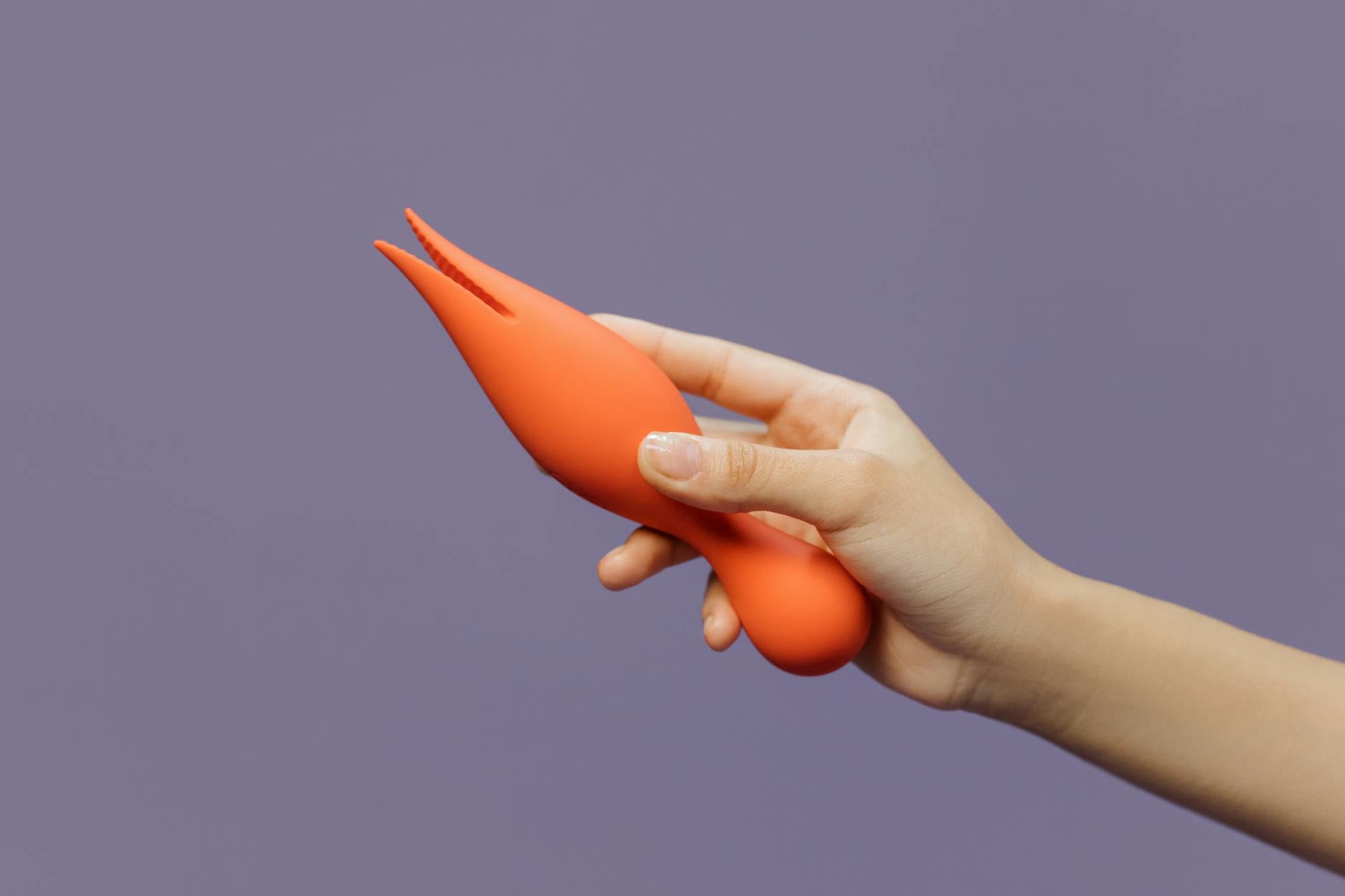
Photo by cottonbro studio on Pexels
Building trust through language
What you say during sex matters as much as what you do. If your partner is holding the lem vibrator, you might say: "I love that you're doing this for me." Or "This feels so good because you're here."
These aren't polite lies. They're true. The sensation is enhanced by presence and permission. Your partner's hands, their attention, their willingness to explore with you makes the experience fundamentally different than using a toy alone.
During and after, name what you're grateful for. "Thank you for being open to this." "I feel so close to you right now." "This is us exploring together."
The lemon sexual toys themselves are neutral. The meaning comes from the context you create around them.
Addressing the comparison trap
At some point, your partner might ask: "Is this better than me?" Or they might assume it is based on how you respond.
Here's the truth: a vibrator produces a specific kind of stimulation that a body can't. It's not better or worse. It's different. And different doesn't mean a replacement.
You might explain it like this: "Your hands and your touch do things this can't. This produces sensations that feel really good in a specific way. But I want both. I want your hands, your body, and yes, sometimes I want this too. They're not competing. They're part of the same thing we're building together."
If your partner has struggled with lasting long enough during sex, a lemon clitoral vibrator can also help you reach climax more quickly while they're inside you, which removes the pressure they've been carrying. That's a genuine benefit to the partnership, not a threat.
What to do if they still resist
Some partners come around immediately. Others need time. Some need to see research or hear from other couples that this is normal.
If your partner remains hesitant after a thoughtful conversation, don't push. Instead, ask: "What would make you feel more comfortable?" Maybe they want to research together. Maybe they want to try a smaller step first. Maybe they want to watch a video about how couples use lemon adult toys. Meet them where they are.
Resistance often softens when someone feels heard and not pressured. Give space for their feelings. "I hear that you're uncomfortable, and I'm not going to force this on you. But I do want us to find a way forward together that works for both of us."
Then follow through. A lemon vibrator isn't worth damaging trust in your relationship. But rebuilding intimacy and pleasure together usually is.
Creating a narrative that works for both of you
Over time, the best couples develop their own language around toys. Maybe you call it "adding to the mix." Maybe you talk about it as "giving your body what it needs." Whatever language feels good to both of you, use it.
The goal is to move past the toy being "the thing we don't talk about" and into it being a natural part of your sexual repertoire. That normalization takes time and repeated positive experiences.
When your partner sees you respond with pleasure, when they feel involved, when they realize the intimacy didn't decrease but actually deepened, something shifts. The fear dissolves. The toy becomes just a tool, not a threat.
FAQ: Partner intimidation and lemon vibrators
What if my partner refuses to be in the room when I use a toy?
That's a boundary they're setting, and you need to respect it initially. But I'd ask why. If they need privacy from the experience to feel comfortable, that's one thing. If they're trying to control whether you have pleasure, that's something worth exploring with a couples therapist. You deserve to have your body and your pleasure respected in your relationship.
Should I hide the vibrator if my partner is uncomfortable?
No. Hiding it sends the message that pleasure is shameful. That reinforces your partner's fear and erodes trust. Instead, keep it visible and normalized. "This is part of how I take care of my body." That's not aggressive. It's grounded.
How long does it usually take for a partner to feel comfortable?
It depends on how much shame or insecurity they're carrying. For some couples, one positive experience is enough. For others, it takes weeks or months of conversations and small steps. There's no timeline. But if a partner is never moving toward acceptance, that's worth examining with a therapist.
Can using a lemon vibrator together improve a struggling relationship?
No. A toy can't fix broken communication or deep incompatibility. But if your relationship is solid and you're both willing to explore, incorporating lemon clitoral vibrators can deepen intimacy and pleasure. It's not a marriage saver. It's an enhancement for couples who are already working.
What if I enjoy the vibrator so much that I do prefer it?
First, it's okay to enjoy something intensely. Second, there's a difference between preferring a specific sensation and preferring the tool itself. If you notice yourself gravitating toward solo play with a lem vibrator and avoiding partnered sex, that's worth examining. It might mean you need more communication about what you want, or it might mean there are deeper relationship issues that need attention.
How do I know if my partner's concerns are reasonable or controlling?
A reasonable concern: "I feel worried this means you're not attracted to me." That's a fear rooted in insecurity that can be worked through with conversation and reassurance.
Controlling behavior: "You're not allowed to use toys." Or "If you use that, I'll leave." That's isolation and control, not concern. If this is happening, reach out to a therapist or counselor independently.
The trust underneath everything
When a lemon vibrator becomes a source of intimacy instead of conflict, it's because trust was there first. Your partner had to believe that you cared about the relationship, that the toy wasn't a sign of a larger problem, and that your pleasure matters.
Build that trust before the toy arrives. Name what you need. Listen to their fears. Move slowly. And remember that pleasure shared is always stronger than pleasure taken. The lemon sexual toys in this world are just tools. The real work is the conversation, the presence, and the willingness to explore your desires together.