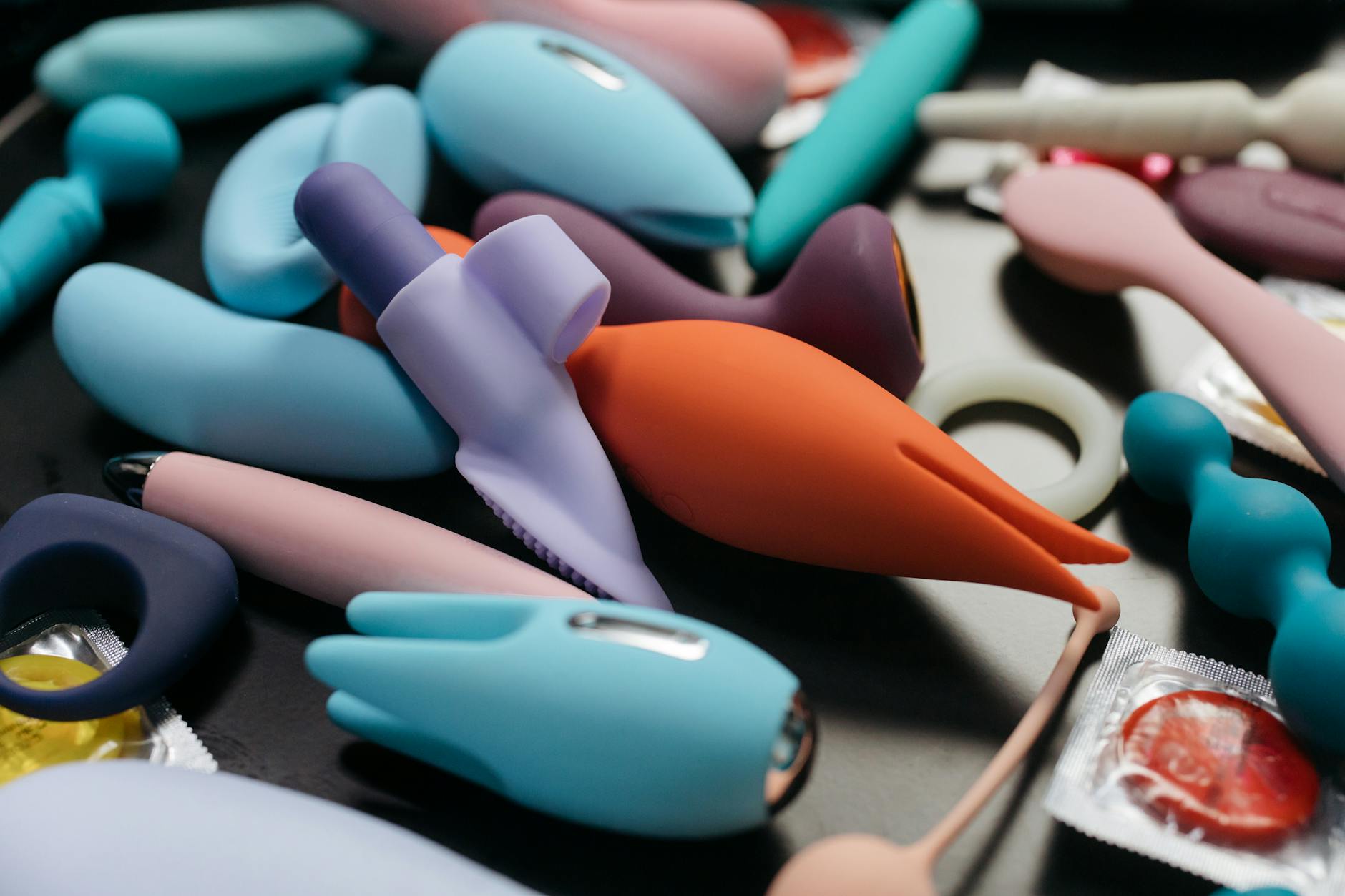
Let's name the thing nobody talks about
You know solo sex is normal. You know it's healthy. You know everyone does it. And yet when you think about actually doing it, something tightens in your chest.
That tension is shame, and it's not a personal failing. It's a script you inherited from family, religion, school, and culture. That script taught you that your body's pleasure was something to manage, hide, or apologize for. Unlearning it takes more than intellectual agreement. It takes time, permission, and usually some practical scaffolding to rewire the nervous system's response.
This is where a lemon clitoral vibrator comes in. Not as a magic fix, but as a tool that can help you rebuild trust with your own body.
Why shame blocks sensation in the first place
Here's the physiology: shame activates your parasympathetic nervous system in a defensive way. Your muscles tense. Your breath gets shallow. Blood flow redirects away from your genitals and toward your large muscle groups. Your brain goes into threat-detection mode instead of pleasure mode.
This is the opposite of arousal. Arousal requires safety, ease, and the ability to focus inward without judgment. Shame makes that impossible.
Many people who grew up with religious or cultural messaging around sexuality report that their first experience with solo pleasure felt rushed, furtive, and loaded with guilt. Over time, that pattern embeds. Your body learns to associate self-touch with anxiety instead of ease. The arousal pathway gets narrower with each guilty experience.
The goal isn't to flip a switch and feel fine. It's to slowly expand the window of tolerance where you can touch yourself without the shame response kicking in.
The lemon vibrator advantage for shame-based blocks
A lemon sucker like the one from Hello Nancy works differently than traditional vibrators. The suction mechanism creates a pulling sensation that stimulates the clitoris without requiring you to touch yourself directly. That small distance matters.
For someone working through shame, that indirect contact can feel safer. You're not manually masturbating. You're using a device. The semantic difference is tiny, but psychologically it gives your nervous system permission to relax slightly. The device is doing the work. You're just holding it.
Second, the sensation itself is often more intense and more focused than what friction alone can produce. That intensity can pull your attention into your body and away from the narrative playing in your head. Shame thrives in a quiet mind. Focused sensation disrupts it.
Third, lemon clitoral vibrators come in gentle patterns. You control the intensity. You're not handing over agency. You're taking it back.
Building a container for permission
Before you even unbox the device, set up the conditions for shame to lose its grip. This is not optional.
Choose a time when you're alone and won't be interrupted. Not sneaking around. Not checking the door. Actual, genuine alone time. Lock the door. Put your phone on silent. Tell your partner you need space, or don't. You don't owe anyone the details.
Second, choose a physical space that feels genuinely yours. Your bedroom is fine. A bathroom with a lock is fine. Some people prefer a specific chair they only use for this. The point is to create a physical boundary that your nervous system recognizes as safe.
Third, do something that signals to your body that this is intentional and worthy. Light a candle. Put on music you actually like. Wear underwear that makes you feel good. These aren't frills. They're signals to your nervous system that this matters, that it's not shameful, that you're worth the preparation.
The first session without judgment
Don't expect an orgasm. That's the wrong goal and sets you up for failure.
Instead, the goal is 15 minutes of touching yourself or using the lemon vibrator without the shame response hijacking you. That's it. That's the whole win.
Start clothed or partially clothed if that feels better. Honestly, your comfort matters more than any rulebook about "proper" technique. If you need to ease into this, ease in.
Touch your body in ways that feel good and have nothing to do with arousal. Your arms. Your neck. Your stomach. Your thighs. Let yourself remember that your body can feel pleasure without guilt. This is not a dress rehearsal for sexual pleasure. It's permission to feel pleasure, period.
Then, when you're ready, use the lemon vibrator on the lowest setting. Place it against your vulva, clothed if you need to be. Let the sensation register. Don't perform arousal. Don't try to orgasm. Just feel.
If shame shows up as a thought like "this is wrong" or "someone would be so mad," observe it. Don't fight it. Don't try to ignore it. Literally narrate it to yourself: "I'm noticing the shame message. That's my nervous system remembering old training. I'm choosing something different now."
Then redirect your attention back to the sensation. Back to the present moment. Back to what feels good right now.
Expanding tolerance slowly
If 15 minutes of clothed, low-intensity touch was fine, great. Do that again next time. Maybe add one more pattern or increase intensity by one level.
If shame got loud and you shut down, that's not failure. That's information. Your nervous system is telling you the pace is too fast. Next time, try 10 minutes instead of 15. Keep the clothes on longer. Use an even lower intensity.
There is no deadline. People who've spent years or decades linking solo sex to guilt don't unlearn that in one session. But they do unlearn it. Slowly. With repetition. With self-compassion when it's hard.
One client I worked with needed three months of weekly solo sessions, fully clothed, just holding a lemon vibrator against her vulva without turning it on, before her nervous system stopped flooding with cortisol. She's now someone who regularly uses the device and feels genuine pleasure. That timeline isn't rare. It's normal.
When to involve a partner (or not)
Some people want to move from solo shame to partnered sex as proof that they're "fixed." Don't do that. That's just importing the partner's pleasure as validation, which is the same old trap.
Instead, build solo pleasure competence first. Get to a place where you can have solo sessions that feel genuinely good, without the partner in the room. That's the goal.
If and when you bring a partner in, be explicit about what you're doing and why. "I'm learning to feel okay with my own pleasure. This is part of that. I don't need you to fix me. I'm inviting you to witness and be part of it." That transforms partnered sex from performance into partnership.
What to watch for
If shame persists even after consistent, gentle solo sessions, that's worth taking to a therapist. Childhood trauma, religious harm, or sexual abuse sometimes need specialized support. A lemon vibrator is a useful tool, but it's not a substitute for processing deep wounds.
Similarly, if using the device brings up panic, flashbacks, or intense distress, stop and seek support. That's your nervous system telling you something important needs attention.
But for garden-variety shame. The kind that comes from cultural conditioning and never having permission to feel good. A lemon vibrator, a locked door, and consistent small steps will usually get you there.
The permission you might need to hear
Your pleasure is not a luxury or an indulgence. It's part of being human. Solo sex is not a failure of partnership or a sign that something is wrong with your relationship. It's an act of self-care and self-knowledge that actually strengthens everything else in your life.
Using a device like a lemon clitoral vibrator is not cheating on a partner. It's not weird or excessive. It's a straightforward tool for experiencing your own body.
And if you grew up being told that your pleasure was shameful, you get to decide that you're choosing something different now. Not because anyone forced you to. But because you deserve it.