
Here's what nobody says about rushing
When sex starts feeling transactional, it's not because your partner doesn't care. It's usually because time has become the enemy. A quick session before work. Fifteen minutes between kids and bedtime. The implicit understanding that this needs to fit into the schedule, not the other way around. Over time, that time pressure bleeds into your body. Your arousal gets shorter. Your orgasms get harder. Your desire just... flattens.
This is where a lemon vibrator changes the math. Not because it's magic, but because it gives you a tool that works faster than traditional methods while also giving you permission to slow down the rest of the experience. Suction-based clitoral vibrators like the Lem are wildly efficient at building sensation, which paradoxically gives you back time for what actually matters: presence, connection, your own pleasure.
Why rushed sex tanks your arousal
Your nervous system doesn't understand multitasking. When you're having sex while thinking about the laundry list, your body registers that you're not safe to relax into pleasure. The parasympathetic nervous system (the one that makes orgasms possible) needs a signal that it's okay to drop your guard. Rush signals the opposite.
Over months or years, rushed sex trains your body to stay vigilant. Arousal becomes harder to access. You stop feeling much of anything. Your partner reads that flatness as low desire, which creates pressure to "just hurry up and enjoy it," which makes you tense up more. It's a cycle.
The deeper issue: you've lost agency over the pace. Someone else's timeline became your timeline. Your body knows this, and it's protecting you by staying shut down.
How a lemon clitoral vibrator reclaims your pace
Here's the tactical shift. Instead of waiting to feel spontaneous arousal during partnered sex, you use a lemon vibrator to build it first. This is not a workaround. This is you taking control of your own pleasure timeline.
When you explore with a lemon sucker on your own schedule, without an audience or a deadline, your nervous system gets the signal: I am safe to feel this. No performance. No clock. Just sensation and what your body actually wants.
The tool itself matters too. Suction-based clitoral vibrators create stimulation that's different from traditional vibration. They're precise, they build quickly, and they don't require the same sustained friction that can feel overwhelming after you've been turned off for a while. For someone whose arousal has been compressed by time pressure, this precision is actually restorative.
Building solo practice into your routine
I'm not talking about replacing partnered sex. I'm talking about reclaiming your own body before you get into bed with someone else.
Set a real time boundary for this. Not "when I have time," but an actual window. Twenty minutes twice a week works for most people. The consistency matters more than the duration. Your nervous system learns: this is my time, and it's non-negotiable.
Start with no goal. Don't show up trying to reach an orgasm. Notice what you feel with the lemon vibrator on the lower settings. Patterns 1 and 2 on the Lem are ideal for relearning sensation if arousal has been dormant. Let yourself feel whatever comes. Sometimes it's pleasure. Sometimes it's boredom. Sometimes it's grief about how disconnected you've felt. All of that is data.
After a few sessions, you'll start to notice what actually turns you on when there's no external pressure. Maybe it's a specific thought. Maybe it's a memory. Maybe it's just the sensation itself. That information is gold when you go back to partnered sex, because now you know what you actually need.
Bringing the lemon vibrator into partnered moments
Once you've spent time with your own arousal, using a clitoral vibrator during sex with a partner changes the dynamic entirely.
You're no longer racing to catch up to their arousal. You're using the vibrator to build what you need, at your pace, while they're present. That presence matters. They're watching. They're participating in your pleasure instead of asking you to perform for theirs.
Start the conversation outside the bedroom. "I want to use my lemon vibrator during sex because I need more time to feel aroused, and I want you there while that happens." Most partners are relieved to have clarity instead of guessing. They get to see what actually turns you on. You get the time you need. The pace becomes mutual instead of one person chasing the other.
During sex: use the vibrator exactly as you would alone, with one shift. Your partner is there. Some people like to be inside while using it. Some like focused clitoral work first, then partnered sex after. Some like their partner to hold them while they use it. The configuration is less important than the agreement that this is your arousal timeline, and they're respecting it.
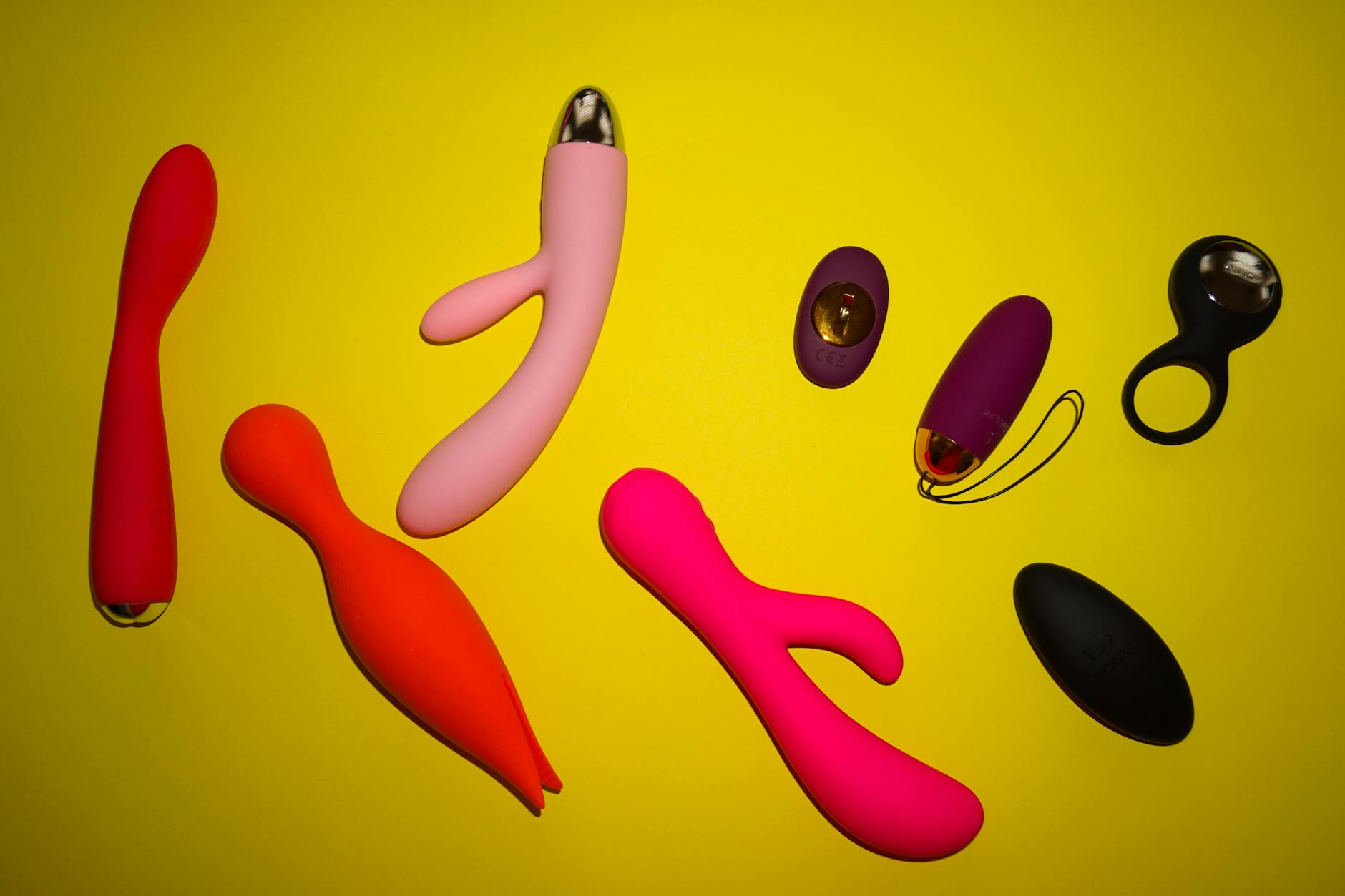
Photo by FounderTips on Pexels
When a partner resists slowing down
Some partners will push back. "You take too long." "Can't you just...?" "Why does it have to be complicated?" That resistance is its own data point. It tells you something about how they value your pleasure versus convenience. That's worth examining, ideally with a therapist or counselor.
But here's what matters for right now: you don't need their permission to know your own body. If they're unwilling to give you time and presence during sex, the lemon vibrator becomes even more important as a solo practice. Because at minimum, you deserve to know what arousal feels like without an audience or a timer.
If the relationship can't move toward mutual pleasure over time, that's information too.
Pleasure on your own terms
Using a lemon clitoral vibrator when sex has felt rushed isn't about adding a toy to fix the problem. It's about reclaiming the pace, the presence, and the permission to feel whatever your body actually feels. Once you know what arousal looks like without pressure, you can bring that knowledge back to partnered moments. The vibrator becomes a tool for presence instead of performance.
You deserve sex that doesn't feel like checking a box. You deserve to feel your own desire, to build it, to have it matter. A lemon vibrator gives you the space to practice that.
People also ask
Can I use a lemon vibrator during sex if my partner hasn't used toys before?
Yes, and it's often easier than you'd think. Frame it as about your pleasure, not as commentary on theirs. "I want to use this because I need more direct clitoral stimulation" is different from "I'm not satisfied with what you're doing." Most partners care more about the experience being good for you than about whether a toy is involved. If you've already spent time with the vibrator alone, you'll know exactly what you want, which makes the conversation less theoretical and more confident.
How do I not feel self-conscious using a lemon vibrator with a partner watching?
Practice alone first. A lot. The more familiar you are with your own body's response to the vibrator, the less strange it feels to let someone watch. Also, most partners find watching their partner's pleasure genuinely hot. You're not performing for them. You're letting them witness something real. Start with patterns 1 or 2 on the Lem if you're nervous. Lower intensity feels less intense emotionally too.
What if using a lemon vibrator solo makes me feel guilty about not wanting "natural" sex?
This guilt usually comes from the belief that your body should work a certain way or that needing tools means something is wrong with you. Neither is true. People need different things. Some need longer warm-up time. Some need specific kinds of stimulation. Some need their nervous system to feel safe first. Needing those things isn't a failure. It's data about how your body works. Honor it.
Is it normal to have trouble reaching orgasm when sex feels rushed?
Completely normal. Arousal and orgasm require parasympathetic activation, which is almost impossible when you're stressed or watching the clock. Your body is protecting you by staying guarded. That's not broken. That's your nervous system doing exactly what it should do when it doesn't feel safe. Slowing down, building arousal separately, and reclaiming your own pace all signal safety back to your system.
How long does it take before rushed-sex anxiety goes away?
It depends, but you should notice shifts in how your body feels within 2-3 weeks of consistent solo practice with a lemon vibrator. Some people feel more relaxed immediately. Some take a few weeks to notice they're not thinking about the clock. Behavioral change is usually slower than we want it to be, but if you stick with it, your nervous system will update. You'll start to feel arousal accessing faster, and the pressure will lift.
Can a lemon vibrator actually fix a mismatch in how fast we want sex to happen?
A vibrator can give you a tool for reclaiming your own arousal, but it can't fix a real mismatch in values about how sex should work. If one person consistently wants quickies and the other needs 30 minutes, that's a compatibility question, not a vibrator question. What a lemon vibrator does is give you clarity about what you actually need, and give you options so you're not always accommodating someone else's pace. Sometimes that leads to better conversations. Sometimes it helps you realize you need different things from the relationship. Either way, it's honest data.
References and sources
Gottman, J. M., & Silver, N. (2015). The seven principles for making marriage work. Harmony Books.
Porges, S. W. (2011). The polyvagal theory: Neurophysiological foundations of emotions, attachment, communication, and self-regulation. W. W. Norton & Company.
Naghii, M. (2003). The role of nutrition in bone health of the postmenopausal woman. Journal of Cardiovascular Nursing, 18(4), 334-341.
Meston, C. M., & Frohlich, P. F. (2000). The neurobiology of sexual function. Archives of General Psychiatry, 57(11), 1012-1030.