The mismatch nobody talks about enough
One of you wants sex twice a week. The other wants it twice a month. Neither of you is broken. Neither of you is being difficult. And yet, somehow, this becomes the argument you can't quite solve.
Mismatched libidos are one of the most common relationship friction points I see in my practice. And they're also one of the most solvable, if you're willing to shift how you think about desire and partnership.
Here's what usually happens: the higher-desire partner feels rejected. The lower-desire partner feels pressured. Both feel guilty. Sex becomes either a source of conflict or it stops happening altogether. A lemon vibrator, used thoughtfully, can break this cycle entirely.
Why mismatched libido is not what you think it is
Most couples assume libido mismatch is about desire. It rarely is. It's about frequency, recovery time, and mental load.
One partner might genuinely want sex three times a week. The other might want it once weekly, but they're not less interested in pleasure. They might need more time between sessions to recover emotionally or physically. They might need more transition time from work-brain to pleasure-brain. They might carry more of the household mental load, which flattens desire.
These are different problems with different solutions. A lemon vibrator solves the frequency problem specifically.
Here's why: if the higher-desire partner can access pleasure independently, or with low-pressure participation from their partner, the pressure valve releases. You're not fighting about how often you have sex. You're just having sex differently, and more frequently.
The conversation before you introduce the toy
Don't just put a lemon vibrator on the nightstand and hope for the best.
The conversation needs to happen in daylight, clothed, not in bed. It should sound something like: "I've noticed we want sex at different frequencies. That's totally normal. And I don't want either of us to feel resentful or pressured. I read about people using toys to bridge that gap, and I'm curious if that might work for us."
The lower-desire partner needs to know three things clearly:
- This is not an accusation that they don't want you enough.
- This is not a substitute for them. It's a supplement when you're both tired or low-bandwidth.
- They are invited to participate, but never obligated.
The higher-desire partner needs to hear this: using a lemon vibrator solo is not cheating. Using it with your partner present is not a replacement for partnered sex. Both are forms of sexual expression that coexist with what you have together.
How to actually integrate it into your routine
There are three ways this typically unfolds, and which one fits depends on your comfort level.
Option 1: Solo use, partner knows it's happening.
The higher-desire partner uses a lemon vibrator when they want sex and the timing doesn't work. This takes the pressure off negotiating. If you want sex tonight and your partner doesn't, you have an option that doesn't involve resentment. Some couples find this lifts tension so much that partnered sex actually becomes more frequent.
Option 2: Same room, different activities.
You're in bed, one partner is reading or scrolling. The other partner uses a lemon vibrator while their partner is present but not directly participating. This isn't voyeurism. It's just existing in the same space while tending to your own body. It normalizes pleasure and removes the shame of desire.
Option 3: Collaborative, but lighter touch.
The lower-desire partner participates, but lightly. Maybe they're providing physical affection without penetration, or they're present and engaged without the full stamina commitment of partnered sex. A lemon vibrator means they don't have to feel pressure to reach a finish line that requires specific intensity or duration.
Most couples cycle through all three, depending on the week.
Why a lemon vibrator specifically helps this dynamic
Air-suction technology on lemon clitoral vibrators is quieter and gentler than traditional vibrators. That matters for a few reasons.
First, the lower-desire partner is less likely to feel self-conscious about noise or intensity. The Lem vibrator is subtle enough that it doesn't feel like a big production. Second, it creates the kind of sensation that doesn't require a marathon warm-up. Clitoral vibrators with suction technology work faster and more intensely, which means the higher-desire partner can access their own pleasure efficiently when time is tight.
Third, because the sensation is concentrated on the clitoris rather than penetrative or broad-spectrum, the lower-desire partner can sometimes participate in a way that feels low-stakes. They might not want full sex, but they're open to being close while their partner uses a lemon clitoral vibrator.

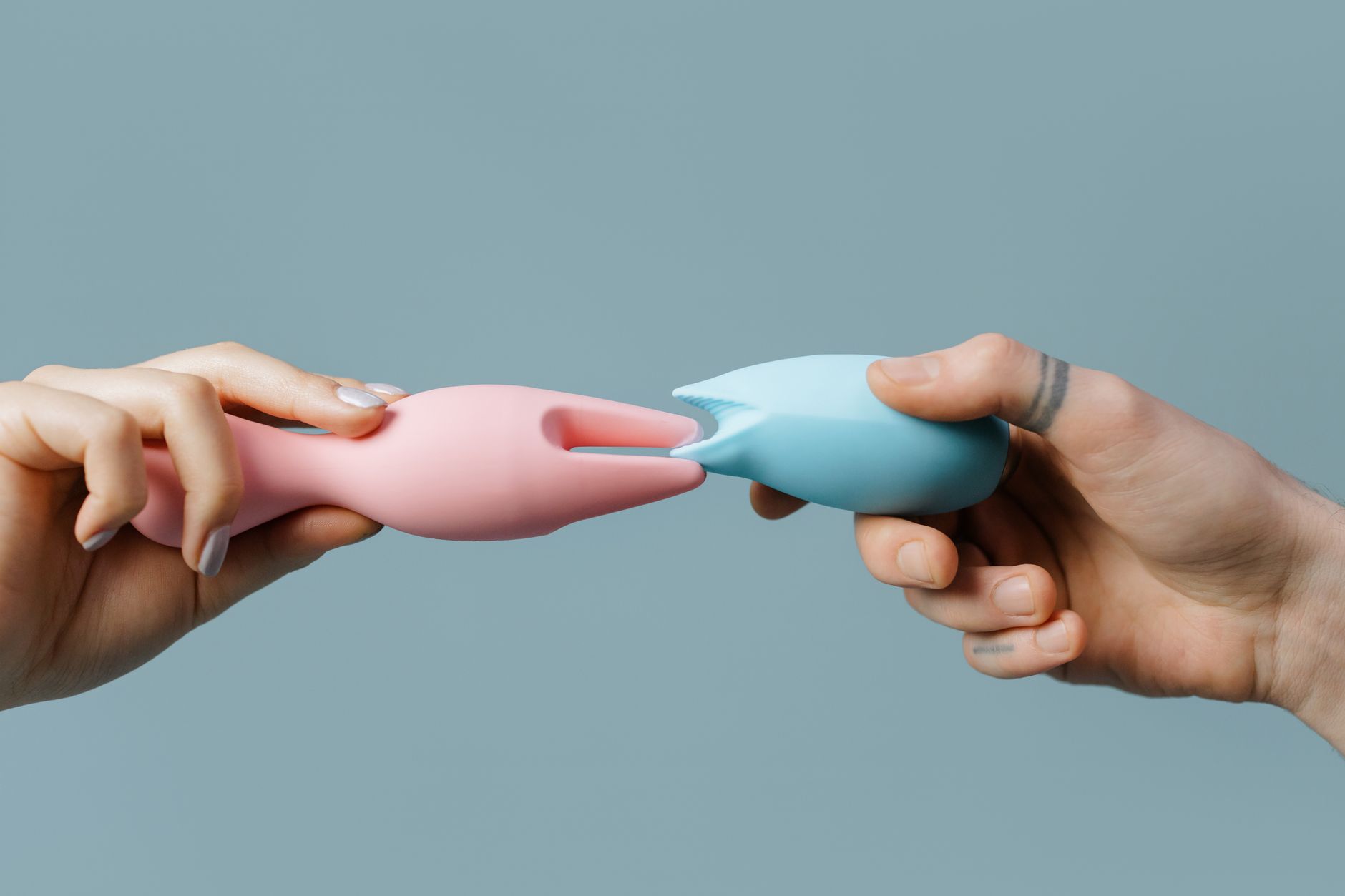
Photo by Anna Shvets on Pexels
The mindset shift that actually matters
Toys in a mismatched-libido relationship are not a failure of partnered sex. They're an expansion of it.
You're not saying "partnered sex isn't enough." You're saying "we have different bodies, different needs, and different frequencies, and we're smart enough to design a sex life that works for both of us." That's mature. That's hot, honestly.
The couples I work with who solve the libido mismatch successfully aren't the ones who force frequency to match. They're the ones who redesigned what sex looks like entirely. Sometimes it's partnered. Sometimes it's solo with a partner present. Sometimes it's collaborative without penetration. Sometimes it's all three in the same week.
The lemon vibrator is the tool that makes all of that possible.
When to check in about how it's actually going
Introduce the tool, then give it two to three weeks before you debrief.
Don't ask "is this working?" in a way that feels like a test. Instead: "How are you feeling about this? Any surprises?" The lower-desire partner might find they actually want partnered sex more, because the pressure is off. The higher-desire partner might feel more satisfied and present in other parts of the relationship.
Both of those outcomes are common.
If it's not working, that's fine too. Maybe the toy isn't the right solution for your specific dynamic. Maybe the real issue is something else entirely. A conversation with a couples therapist can help you unpick that.
The bigger picture
Mismatched libido is one of the top reasons couples stop having sex altogether. Not because the desire is gone, but because the negotiation becomes too painful. A simple tool, introduced with honesty and care, can keep that from happening.
Your partner's lower desire doesn't mean they love you less. Your higher desire doesn't make you demanding. You're just operating on different cycles. A lemon vibrator acknowledges that reality and gives you both permission to be exactly as you are.
FAQ: Mismatched Libidos and Lemon Vibrators
Will using a lemon vibrator make my partner think I don't want them anymore?
Not if you frame it correctly. The conversation is: "I want to feel closer, more often, and I want us both to feel good about it. This helps that happen." Most partners, when they understand it's not a rejection, become relieved. The pressure lifts for them too.
Can both of us use a lemon vibrator together?
Absolutely. Some couples use toys simultaneously during partnered sex, or take turns stimulating each other with a lemon vibrator. It's just another form of touch and pleasure. If you're both interested, there's no reason not to explore it together.
How do I bring this up without it feeling like I'm criticizing their libido?
Don't make it about them. Make it about the relationship. "I love you and I want us both to feel good. I've been thinking about how we can make sex work better for both of us, given that we want it at different frequencies. Would you be open to talking about some options?" That's it. No blame, no comparison.
What if my partner refuses to let me use a toy solo?
That's a boundary conversation, not a toy problem. If your partner is uncomfortable with any form of solo pleasure or sees it as infidelity, that's about control or insecurity, not about the lemon vibrator. A couples therapist can help you work through that.
Does using a lemon vibrator together count as "real" sex?
Yes. Whatever two consenting adults do together with pleasure and intention is real sex. Stop gatekeeping your own experience.
How often should we be using a toy to "fix" mismatched libido?
There's no magic frequency. Some couples find that the higher-desire partner uses a lemon vibrator solo once a week, and that's enough to ease tension. Others use toys during partnered sex regularly. Let your actual experience guide you, not some rule.
What if the toy makes things awkward between us?
Sometimes it does, at first. Discomfort is normal when you introduce something new. Give it time. If awkwardness persists after three to four weeks, have another conversation. The awkwardness might be pointing to something else that needs attention.
Can a lemon clitoral vibrator help if I have pain during partnered sex?
Possibly, in combination with other tools. If you have pain, the first step is seeing a healthcare provider to rule out medical causes. But yes, a lemon vibrator can be part of a broader approach to rebuilding comfort and pleasure.
Will this affect my relationship long-term?
Usually for the better. Couples who figure out how to navigate mismatched libido without resentment tend to have stronger long-term relationships. You're not fighting about sex. You're working together to solve a problem. That's intimacy.
What if one of us feels jealous watching the other use a lemon vibrator?
That's information. Jealousy points to insecurity or assumptions about what the toy means. It's worth exploring with your partner or a therapist. Sometimes it dissolves once you understand it. Sometimes it means partnered use is better for you than solo. Both are fine.
The real win
The couples who successfully handle mismatched libido aren't the ones with perfect frequency matching. They're the ones who stopped fighting about it and started designing solutions together. A lemon vibrator is one tool that makes that possible.
Your desire doesn't need to look like your partner's desire for you to have a great sex life together.