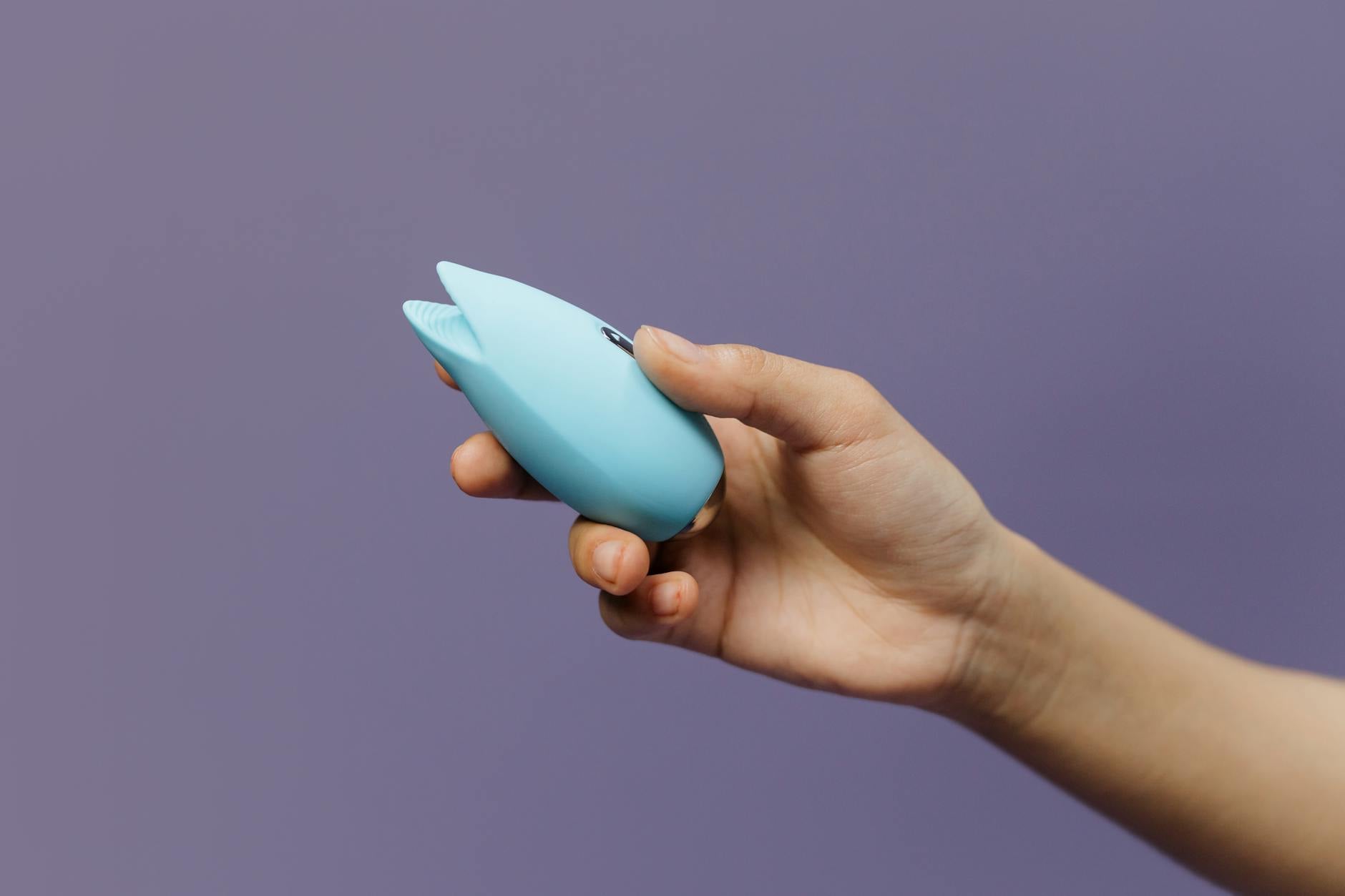
Here's what nobody tells you about vibrator angles
Let's be real. You bought a lemon clitoral vibrator. You've tried it. Something feels off. Not wrong exactly, but flat. Generic. Like you're just holding it there and expecting magic to happen. The angle is usually the culprit, and most people never figure this out because we don't talk about it.
The clitoris isn't a straight line. Your body isn't a flat surface. The lem vibrator works brilliantly when it meets your anatomy at the angle your body actually wants, not the angle you assume you should use. I've worked with countless couples where one partner was convinced a vibrator "just wasn't for them" until they shifted the angle about fifteen degrees and everything changed.
Why angle changes everything
Your clitoris has a stem that extends internally. The most sensitive external nerve endings cluster on the glans and around the visible edges. A vibrator coming straight down hits one spot repeatedly. A vibrator tilted slightly, angled from the side, or positioned at an offset can reach multiple clusters of nerves at once. This isn't a small difference. It's the difference between stimulation that feels good and stimulation that makes you forget where you are.
Here's what you need to know physiologically. Everyone's clitoris sits at a slightly different angle relative to their vulva. Some angle forward toward the pubic bone. Others angle back. Some tilt left or right. There's zero "correct" position. There's only the position your body responds to.
The lemon vibrator's design is actually an advantage here. The curved, ergonomic shape means you have multiple grip options, multiple approach vectors. You're not locked into one way of holding it like you might be with a straight wand. Use this.
The four angles to experiment with
Straight on. This is what most people try first. Vibrator perpendicular to your body, coming directly down on the clitoral glans. This works for some people. For many, it's too intense on one spot and misses the side sensitivity entirely. It's a starting point, not a destination.
Side approach. Tilt the vibrator so it's coming at the clitoris from the left or right side rather than head-on. You're now hitting the side edges where another dense cluster of nerve endings lives. This angle often feels less intense on the tip and more sensational across a wider area. Many people find this is when things actually start clicking.
Angled back toward the body. Instead of perpendicular, angle the vibrator back toward your body so you're stimulating the upper side of the clitoral glans and the hood area. This reduces direct pressure on the tip while increasing sensation through the surrounding tissue. It's a softer, broader feeling.
Offset circular. This is what I call it when you're not moving the vibrator, but you're holding it at an angle and letting it make small circles against your body. The angle plus the motion means no single point of contact stays fixed. You're distributing sensation across multiple nerve pathways instead of hammering one. For people with sensitivity issues or anyone rebuilding their relationship with pleasure, this is often where breakthrough happens.
None of these is "right." Your body will tell you which one lights up the most neurons.
How to actually experiment without losing your mind
First, slow down. Not slower vibrator speeds necessarily, but slower exploration. You're not trying to get off. You're collecting data.
Start at a low vibration setting. Try straight on for maybe thirty seconds. Notice what you feel. Is it good? Too much? Too localized? Then tilt slightly and try again. Fifteen seconds. Small adjustments. You're mapping your body, not auditioning for an orgasm.
Pay attention to what makes you want to push in harder versus pull back. If you're bearing down against the vibrator, the angle or intensity is probably not quite right. Ideally you should feel like the vibrator is coming to you, not like you're chasing it.
If you feel numbness appearing, that's a sign the angle isn't distributing sensation well. You're flooding one nerve cluster and the surrounding tissue is going numb. Switch angles. The numbness will usually clear within seconds.
Use your breath as feedback. When your breathing changes, that's your signal that you've landed on something your nervous system likes. Don't override that with your brain's idea of what should work.
The positioning setup that makes angle-finding easier
You can't experiment with angles effectively if you're contorted. Get yourself somewhere comfortable first.
Lying on your back is the easiest starting position for angle experimentation because gravity stabilizes things and you have full hand mobility. A small pillow under your hips tilts the pelvic floor slightly and can change what angles feel accessible. Try it with and without.
If you prefer sitting, propped up against a headboard or pillow gives you good leverage and makes angle changes super obvious because you can see what you're doing. For some people this mental feedback loop (seeing the adjustment) makes it easier to remember which angle felt best.
Side-lying can open up angles that feel inaccessible lying flat. If you're lying on your right side, angles approaching from the left suddenly feel different. If straight-on has never worked, side-lying might be the variable you were missing.
When to use each angle with a partner
If you're with someone, angle becomes collaborative conversation instead of solo trial-and-error.
Start by showing your partner the angles that worked when you were alone. Most partners are genuinely relieved to have concrete guidance instead of guessing. "Try this angle" is way more useful than "I'm not sure what I like." It's also sexy because you're sharing information about your own body confidently.
Your partner can help you find angles that might be harder to access alone. You're stabilizing, they're angling. Or they're holding steady while you adjust your body position around the vibrator. This takes pressure off because you're not contorting yourself solo.
The offset circular motion I mentioned earlier is especially good with a partner because one person can hold the vibrator at a fixed angle while the other person makes small movements against it. It distributes the work and creates a collaborative rhythm that often feels more intimate than solo exploration.
The angle shift that changes everything mid-session
Here's something I tell people that sounds weird but works constantly. Sometimes you'll be experiencing good sensation with one angle, and then suddenly it plateaus. Your body has adapted to that nerve pathway and you're getting diminishing returns.
Instead of pushing harder or thinking something's wrong, just shift the angle. Rotate the vibrator ten or fifteen degrees. You're now stimulating different nerve endings. Your body resets. Sensation comes roaring back.
This is why people with a lemon clitoral vibrator often experience longer, more varied sessions than with a toy that locks them into one angle. The ergonomic grip design means switching angles takes seconds. You're not starting over. You're fine-tuning.
This angle-shift technique is also brilliant if you're building toward an orgasm that feels stuck. Sometimes the blockage isn't psychological or physical tightness. It's that the angle you've been using has fatigued that specific nerve pathway. A slight rotation wakes up fresh tissue. Orgasm goes from feeling impossible to feeling inevitable.
Troubleshooting common angle frustrations
"I keep losing the angle I found." Your hand is probably getting tired. Lower the vibration speed so you don't need as much pressure to feel it. This takes physical effort out of the equation and lets you hold the angle steadily. Or give yourself permission to change angles more frequently instead of white-knuckling one for ten minutes.
"Every angle feels too intense." Lower the vibration setting significantly. You might not have a sensation problem. You might have an intensity problem masquerading as an angle problem. Once you go lower, you'll probably find that yes, angle matters, but now you can actually feel the difference between angles instead of just feeling "a lot."
"I have no idea what I'm supposed to be feeling." This is super common, especially if your relationship with touch and pleasure has been distant. You're not broken. You're just not calibrated yet. Spend a few sessions not trying to reach any outcome. Just rotating through the four angles I mentioned, pausing for five seconds at each, noticing what's different. Treat it like you're learning the difference between major and minor musical notes. The sensitivity will develop.
"My partner keeps angling it the way they think is "right."" Have that conversation directly. Tell them exactly what angle made your body feel good when you were alone. Most partners respond well to specificity because it removes the guessing game. "I liked it when you tilted it toward the left" is wildly more helpful than "I don't know, that wasn't quite it."
Why this matters beyond the obvious
Learning to find your angle isn't just about pleasure, though that's excellent in itself. It's about building a relationship with your own body that's based on direct experience instead of assumption or anxiety.
When you discover that a small adjustment transforms sensation from meh to incredible, you learn something deeper. You learn that your body is responsive. You learn that small, intentional changes matter. You learn that you're worth the two minutes it takes to get this right.
This transfers to everything. Your confidence in asking for what you want. Your ability to make changes instead of settling. Your belief that you deserve things that feel genuinely good, not just tolerable.
People also ask
How do I know if I've found the right angle?
Your breathing will change. Your body will want to press into it instead of retreat. You'll stop thinking about whether you're doing it right and just experience sensation. If you're still analyzing, you probably haven't found it yet. Once you do, your brain goes quiet. That silence is the signal.
Can the right angle change over time?
Yes, absolutely. Your body changes with hormones, stress, age, and experience. An angle that was perfect six months ago might feel different now. This is normal and not a problem. It just means checking back in every so often instead of assuming you've permanently figured it out. Your body's preferences are responsive, not fixed.
Is it normal to prefer one angle massively over others?
Completely normal. Some people find that two or three angles work really well and one or two feel wrong. You don't need to like everything equally. You just need to know what works for you. The fact that you have options means you can adapt based on mood, energy, and what your body needs that day.
What if nothing feels right no matter what angle I try?
First, make sure you're at a low enough vibration setting that you can actually discern the difference between angles. If everything just feels like "vibration," turn it down. Second, give it more than one session. Your body's sensitivity calibrates over time. Third, if you're genuinely not feeling pleasure sensations, that's worth discussing with a doctor because medication, stress, or other factors can affect nerve sensitivity. That's not an angle problem.
Can I use the angle technique with other vibrators besides a lemon vibrator?
Yes. Any vibrator can be angled. The lemon clitoral vibrator's ergonomic shape makes angle changes easier and faster, which is why I mention it specifically. But the principle applies to any toy. The learning process is the same.
How do I bring this up with a partner if we've never talked about angles before?
Simply. "I want to experiment with some different angles when we use this. I think it'll feel better." That's it. You don't need to over-explain or make it weird. Most partners are relieved to have any concrete guidance. If they're resistant, that's information about your relationship that deserves its own conversation.
The real point
Your body isn't wrong for not responding to the first angle you tried. The toy isn't wrong. You're just not matched yet. Finding your angle is how you get matched. Once you do, you'll wonder how you ever thought a clitoral vibrator wasn't for you. You were just looking for pleasure in the wrong geometry. Now you know better.