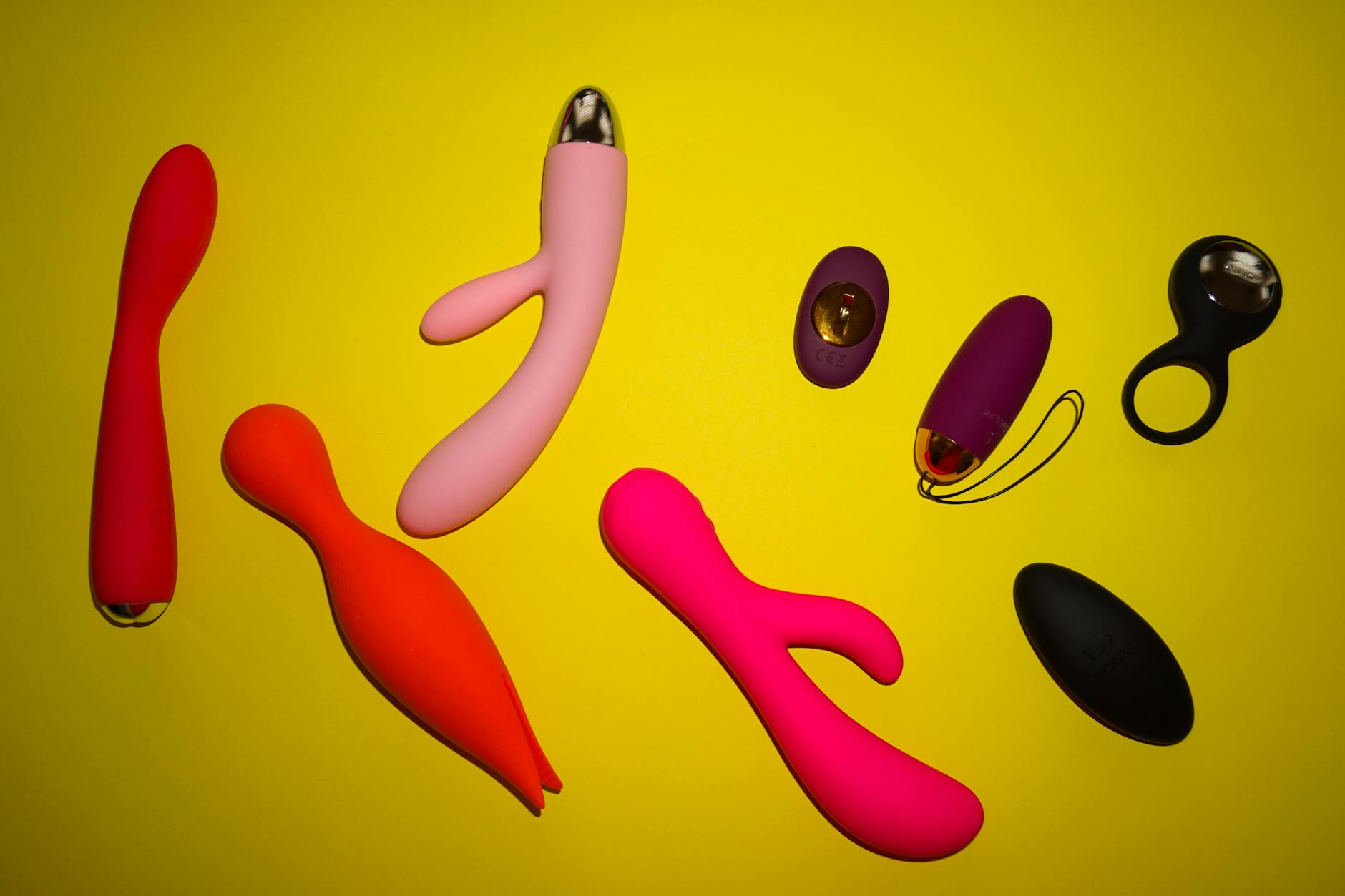
How to Use a Lemon Vibrator for Couples Who Want to Explore Together Without Pressure
Let's be real. Most couples don't introduce toys because they're bored. They introduce them because one partner got curious, felt a little guilty about it, and then brought it up in the worst possible context. Like during a fight. Or right after sex when neither of you is in the headspace to actually talk.
But here's what I've seen work across hundreds of couples in my practice. When a lemon vibrator enters the relationship as an invitation, not a solution to a problem, everything changes. The conversation becomes collaborative instead of defensive. The experience becomes shared instead of solo. And paradoxically, both partners report feeling closer afterward, not more threatened.
The difference isn't the toy. It's the framing.
Why couples reach for a lemon vibrator at all
Most of my clients arrive at this moment for one of three reasons. Either one partner isn't getting the clitoral stimulation they need from penetration alone. Or the couple has fallen into a rhythm where sex has become predictable, and someone wants to gently shake that up. Or one person's arousal takes longer now (due to medication, age, stress, hormonal shifts) and the other person feels stuck waiting around.
All three are legitimate. And all three actually benefit from bringing a tool into the picture that isn't tied to anyone's body or someone's performance. When it's a toy doing the stimulation, nobody's ego is on the line. The lemon vibrator becomes a neutral third player, which sounds weird but is actually brilliant for couples who've started keeping score.
The conversation that changes everything
Timing matters more than you'd think. Don't bring this up right before sex. Don't bring it up during an argument. Don't leave a link on their phone with a message like "thought of you" (I know you're thinking about it).
Instead, pick a low-stakes moment. Sunday morning coffee. A car ride. Literally any time you're not naked or defensive. Start with curiosity, not criticism. "I've been thinking about trying something new together" lands better than "I need more orgasms." One invites collaboration. The other triggers defensiveness.
If your partner's initial response is hesitant, pause. Don't oversell it. The worst thing you can do is make them feel like you're trying to convince them their current efforts aren't enough. That's not what this is about. A lemon clitoral vibrator isn't a judgment on your partner's technique. It's an addition, like adding music to a quiet room.
Say something like: "I just want to explore what feels good for both of us. Would you be open to that?" Notice the word "both." That matters.
Starting slow: the first time matters
Don't unbox it five minutes before sex. Introduce the lem vibrator when you're both clothed, curious, and not under any pressure to perform. Maybe look at it together while you're sitting on the couch. Let your partner hold it. Ask questions about texture, weight, how it feels. This sounds obvious but most couples skip it and jump straight to "okay let's try it now."
The first actual use should be low stakes. That might mean using it only on yourself while your partner watches. Or having them use it on you externally first, both of you still clothed or partially clothed, just to see how it feels. No expectation of orgasm. No stopwatch. No performance metric.
If your partner is the one who asked to try a lemon vibrator, this is especially important. Give them space to explore without being the center of attention. Let them use it solo first if they want. Let them figure out what settings and angles work for them before anyone else is involved.
What often happens is this. After a few experimental sessions, both partners relax. The vibrator becomes less of a "thing we're doing" and more of just a tool in the rotation.
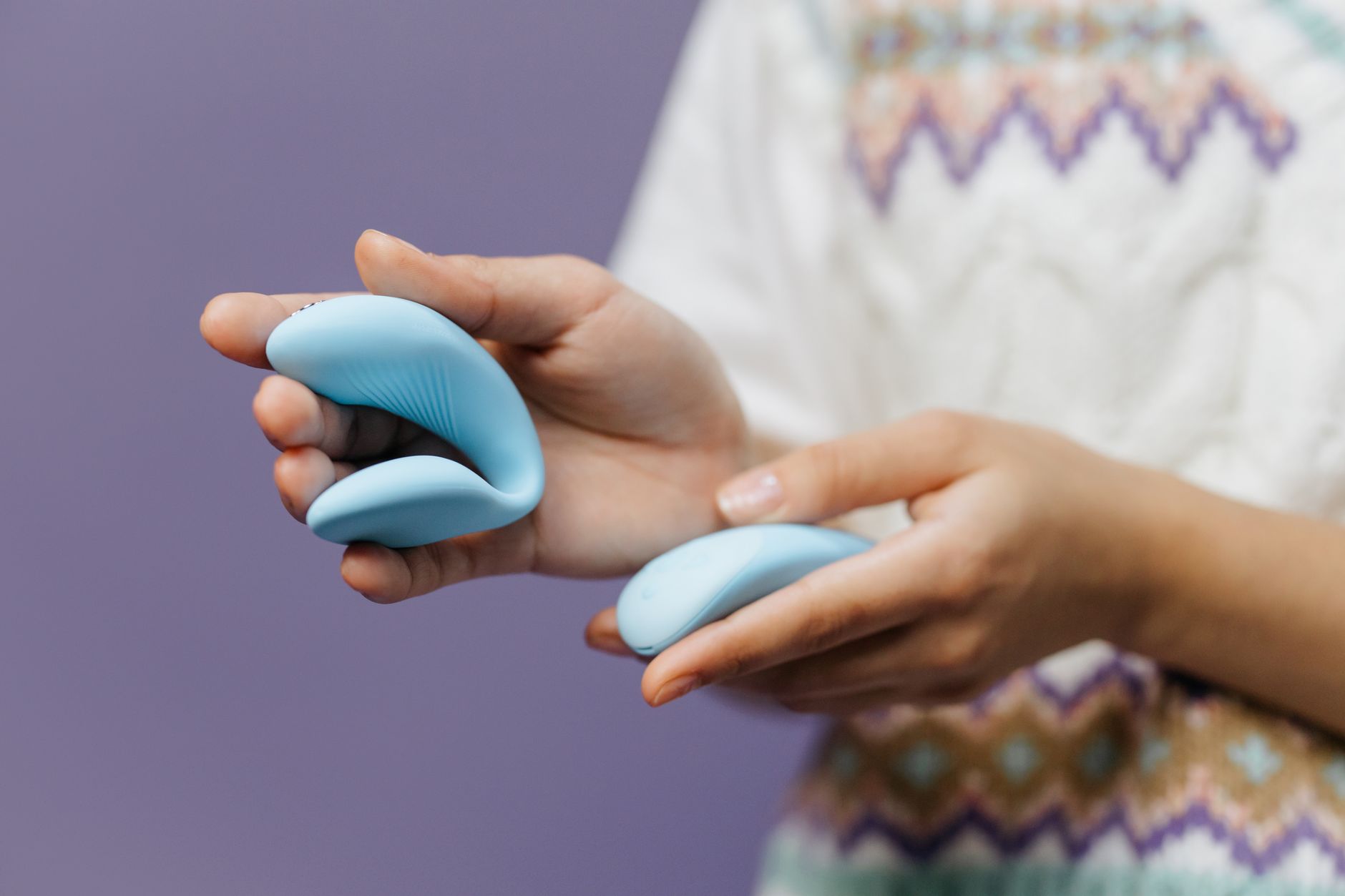
Photo by cottonbro studio on Pexels
The pleasure dynamics that actually shift
Here's where couples often get surprised. When one person is receiving clitoral stimulation from a lemon vibrator, the receiving partner often enters a completely different headspace. They're not thinking about their partner's pace or endurance. They're not performing gratitude or faking enthusiasm. They're just focused on sensation.
And the partner who isn't receiving? They suddenly have bandwidth to pay attention to everything else. They're observing what makes their partner respond. They're reading arousal in real time. They can touch other parts of the body, kiss, tease, build anticipation. The dynamic becomes collaborative instead of solo.
Many couples tell me this is the first time in years they felt like they were actually on the same team during sex instead of performing separate roles.
Communicating during and after
One thing that trips up couples is the assumption that once you've introduced a toy, you just know how to use it together. You don't.
Before sex, talk about what you're curious about. Do you want the vibrator used throughout, or just at the end? Do you want it in addition to penetration, or instead of? Do you want your partner holding it, or are you controlling it?
Then actually check in during sex. Not with a formal "Are you okay?" Every thirty seconds. But a real question. "Does that feel good?" "Want me to change the angle?" "Do you want me to go faster?"
After sex, especially after the first few times, talk about it when you're both relaxed. Not during sex. Not right after when you're both tired. Maybe the next morning. "That felt really good when you held the lem vibrator at that angle." Or honestly, "That wasn't quite what I expected, but I liked x part."
This is how you actually learn your partner's body over time instead of just assuming you already know.
When to bring more lemon vibrators into the mix
Some couples use the same toy. Some couples buy their own. There's no rule. But I'll tell you what usually works. If one partner is using the lemon clitoral vibrator and the other partner wants simultaneous stimulation, having a second toy usually beats waiting for turns. Nancy Lems makes a few different shapes and sizes, so you might explore whether a different lemon vibrator works better for both of your bodies.
The key is that this isn't about comparison or competition. It's about both people having a way to feel good at the same time.
What happens when one partner was more into this than the other
You brought a lemon vibrator into your sex life. One of you was excited about it. The other was doing it partly to make you happy. This is actually a really common dynamic, and it doesn't mean the reluctant partner doesn't enjoy it. They just might not be as invested in the experiment.
The trap is assuming that means you should stop using it. Most therapists (including me) would tell you the opposite. Some of my best couples have learned to use toys and techniques even though one partner was skeptical at first. The turning point usually comes when the reluctant partner realizes that the toy genuinely makes their partner feel better. Then it becomes about care, not about performance anxiety.
If someone was truly uncomfortable, you'd know. They'd say so directly. If they're just being neutral, give it time. Let them see that nothing bad happens. Let them notice that you're not comparing them to a vibrator or getting too attached to it. Eventually, curiosity often takes over.
When a lemon vibrator actually helps communication
Here's something I've observed that surprises most couples. Introducing a toy, especially one like a lemon clitoral vibrator that's specifically designed for external pleasure, often leads to better conversations about pleasure overall.
Because now you have to talk about what feels good. You have to use your words. You can't just let someone guess. And once you've started doing that about a vibrator, that skill transfers to everything else. You end up having better conversations about pace, pressure, timing, and what you actually need.
Some couples I work with say this was the first time they actually heard what their partner wanted. Not assumed. Not guessed. Actually heard it.
A common worry worth addressing
A lot of people (and I mean a lot) worry that introducing a toy means their partner will prefer the vibrator to them. That's understandable. But neurologically, it's not how pleasure works. A lemon vibrator is a different sensation, not a better one. It's an addition, not a replacement.
Think about it this way. You probably prefer the way your partner touches you to the way you touch yourself. But you still masturbate sometimes. Both are good. They're just different.
If your partner starts preferring solo time with a toy to partnered sex, that's worth a deeper conversation. But that's rarely about the toy. That's usually about something else going on in the relationship that needs attention.
The shift that happens over time
What I notice with couples who stick with using a lemon vibrator together is that their sex life actually becomes less pressured overall. Because now there's a tool that can deliver reliable clitoral stimulation without anyone having to perform or prove anything. That takes a huge weight off.
Sex becomes something you do together rather than something one person does for the other. And that's a fundamentally different experience.
What to do if things feel awkward
If your first or second attempt with a lemon vibrator feels awkward or uncomfortable, that's completely normal. New things are awkward. That doesn't mean you should give up. It usually means you need to slow down, laugh about it, and try again when you're both less in your heads.
Some of my best couples had the most awkward first times with toys. But they pushed through the awkwardness because they were genuinely curious about each other. And on the other side of that awkwardness was usually something really good.
FAQs
How do I introduce a lemon clitoral vibrator to my partner if they've never used a toy before?
Start with conversation, not the toy itself. Explain that you're interested in exploring shared pleasure and new sensations together. Ask if they're open to it. If they are, let them hold the vibrator while you're both clothed. Answer questions. Then use it on yourself first so they can see how it works without feeling watched or judged. Most people are curious once they see that it's not a big deal.
What if my partner says no to using a lemon vibrator?
Respect that. But dig a little deeper if you're comfortable. Is it about discomfort with toys in general? Fear that they're being replaced? Religious or cultural beliefs? Once you understand the actual concern, you might find a path forward that feels good to both of you. Or you might decide to drop it. Either way, you'll have more information.
Can we use a lemon vibrator during penetrative sex?
Absolutely. A lemon clitoral vibrator works great during penetration. One partner controls it, or the receiving partner can. Some couples use it during penetration and remove it before orgasm. Others keep it going through the whole thing. There's no right way, only what feels good to you.
What if the lemon vibrator feels too intense for my partner?
Many lemon vibrators have multiple intensity settings. Start on the lowest setting. Try it over clothing first. You can also experiment with applying it indirectly (slightly off to the side of the clitoris) rather than directly. Some people need a lot of buildup before higher intensities feel good. Take your time.
How often should couples use a lemon vibrator together?
Honestly? As often as you both want to. Some couples use it every time they have sex. Others use it once or twice a month. There's no frequency rule. It's about what serves your pleasure and your connection.
Is it normal to feel self-conscious while my partner uses a lemon vibrator on me?
Completely normal. Vulnerability is part of pleasure. What usually helps is realizing that your partner isn't judging you. They're into this moment with you. They're curious about what makes you feel good. Self-consciousness usually fades once you realize nothing bad is happening and your partner is genuinely enjoying it too.
The real reason couples should explore this together
A lemon vibrator isn't magic. But it is an invitation. An invitation to slow down, to communicate, to get curious about each other's bodies in a new way. Most couples go years without that kind of collaborative exploration. They fall into patterns. They assume they already know everything.
Introducing a tool like a lemon clitoral vibrator gives you permission to ask again. To notice things you missed. To remember what it felt like to discover each other.
That's what changes.
If you're thinking about trying this with your partner, start with the conversation. Skip the pressure. Move at whatever pace feels right for both of you. And remember that this is supposed to be fun. If it stops being fun, you can stop. But if you're both curious and willing, there's usually something really good waiting on the other side of the initial awkwardness.
Questioning whether a lemon vibrator is right for your relationship? Get in touch at our contact page and let's talk through it.
References
Gottman, J. M., & Silver, N. (2015). The Seven Principles for Making Marriage Work. Harmony Books.
Katz, A. (2012). "Sexuality and intimacy in long-term relationships." Journal of Couple and Relationship Therapy, 11(2), 129-141.
Meston, C. M., & Frohlich, P. F. (2000). "The neurobiology of sexual function." Archives of General Psychiatry, 57(11), 1012-1030.