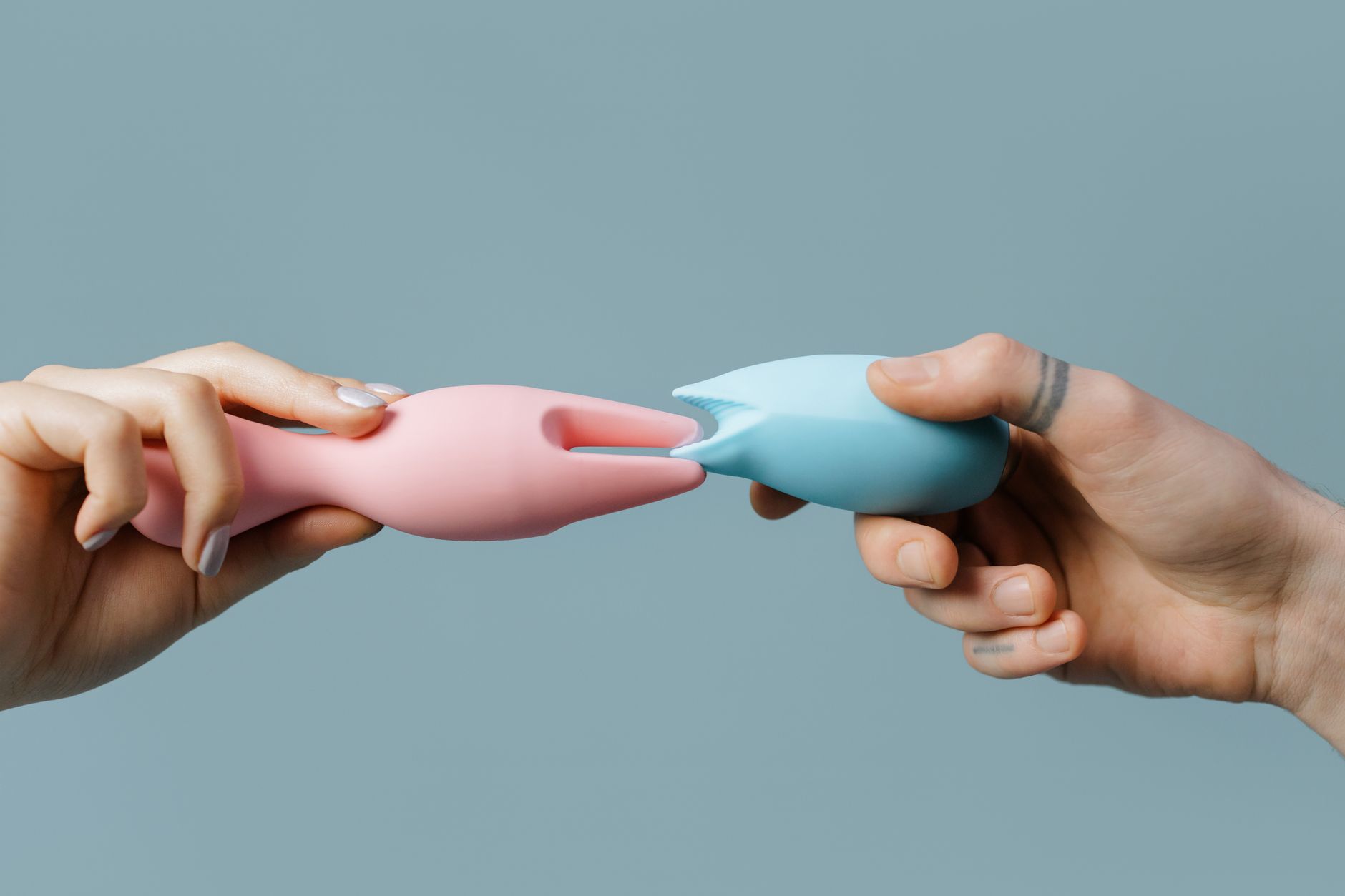
Best Lemon Vibrator for a Sensitive Clitoris: Comfort Without Overload
Let's be real. A sensitive clitoris doesn't mean your body is malfunctioning. It means traditional vibrators are probably too much, and you've maybe given up on toys altogether because the sensation feels sharp, overwhelming, or just wrong.
Here's the thing: most standard vibrators are designed for friction and deep rumble. But when your clitoris is sensitive, you need something different. You need precision without assault. You need control. That's where lemon vibrators come in.
The Lem and similar air-suction clitoral vibrators work on suction rather than vibration, which changes everything for sensitive bodies. No buzzing. No friction. Just gentle, targeted stimulation that you can modulate from barely-there to genuinely intense. And the best part? You're in charge of the intensity from the first touch.
Why lemon vibrators feel different on a sensitive clitoris
The difference comes down to physics. Traditional vibrators move back and forth really fast, creating friction against delicate tissue. A lemon clitoral vibrator (or any air-suction device) uses gentle suction to stimulate nerve endings without that mechanical pressure.
Think of it like the difference between someone rubbing your arm hard versus someone lightly holding your arm close to their mouth and creating gentle suction. Same nerves, totally different sensation. For a sensitive clitoris, suction is usually the move because it avoids friction entirely.
Your clitoris has about 8,000 nerve endings concentrated in a tiny area. When those nerves are easily triggered, intensity builds fast. With air-suction, you're not applying force directly. You're creating a sensation that the nerve endings interpret as pleasurable without overload. This is why many people with sensitive clitorises report that the Lem works where other toys didn't.
Starting with the right intensity setting
This matters so much that I'm putting it first. Most people with a sensitive clitoris jump to setting 3 or 4 out of curiosity. Then they get overwhelmed and assume the toy isn't for them. Wrong diagnosis.
Here's what I recommend: start on setting 1. That's it. Spend two or three sessions just getting used to how setting 1 feels. Some people find it's all they need. Others want to move up after a few sessions. Your nervous system will tell you when it's ready.
The pattern also matters. Some lemon vibrators cycle through pulse patterns. For a sensitive clitoris, the consistent, steady patterns are usually better than irregular pulses, which can feel jarring. Pick a pattern and stick with it for a few tries before experimenting.
How positioning changes everything
Where you position the vibrator on your clitoris changes the sensation dramatically. If you place it directly over the glans (the visible tip), most people find it's too intense pretty quickly. One notch back, toward the clitoral shaft, often feels perfect for sensitive bodies.
You're also not locked into one position for the whole session. Many people with sensitive clitorises enjoy moving the vibrator slightly or keeping it at different angles. Some prefer a circular motion. Others prefer steady pressure. Lemon vibrators give you that flexibility because they're small enough to position precisely.
Another detail: the clitoris has a hood (tissue that covers it). Keeping the hood in place while you stimulate can actually reduce intensity because there's an extra layer between the vibrator and the nerve endings. This is sometimes the sweet spot for sensitive bodies.
The warm-up phase you probably skipped
Your clitoris needs blood flow before stimulation. I know that sounds basic, but most people with a sensitive clitoris skip straight to the toy because they're excited or because they think their sensitivity means they should go slow on everything. Backwards.
Spend 5 to 10 minutes just touching yourself without a toy. Fingers, hand, whatever feels good. Your clitoris will become slightly engorged, and the sensitivity you're feeling right now is partly because there isn't enough blood flow. Once you're aroused, a lemon vibrator often feels gentle instead of overwhelming.
This is not a long foreplay requirement. This is your nervous system getting ready. Same reason a cold muscle is more injury-prone than a warm one.
When lubrication helps (and when it doesn't)
With air-suction vibrators, you usually don't need lubricant. The suction creates its own kind of glide. But some people find that a small amount of water-based lube actually reduces sensation slightly because it changes how the suction feels.
If you have dryness (either from age, medication, or just your body), a thin layer of lube won't hurt. Silicone lube is richer but can damage silicone toys. Stick with water-based if you use anything at all.
The key: you don't need much. A tiny amount applied to the clitoris itself, not the toy, is plenty. Too much lube and the suction breaks and you lose the sensation entirely.
Managing overstimulation if it happens
Sometimes even setting 1 feels like too much, especially if you're new to this or if you're in a particularly sensitive phase of your cycle. That's not failure. That's information.
If you feel overwhelmed mid-session, just stop. Seriously. Put the toy down, breathe, maybe touch yourself without it for a minute. Your nervous system is telling you something. That might mean a lower setting next time, a longer warm-up, or just a different day entirely.
Overstimulation can also happen as pleasure builds. If you notice the sensation shifting from good to uncomfortable, ease off. You can always come back to it. Building a sustainable relationship with pleasure means knowing when to stop.
Pairing a lemon vibrator with your body's patterns
If you menstruate, your clitoral sensitivity changes throughout your cycle. During ovulation, many people find they tolerate higher settings. Before menstruation, sensitivity often increases. This isn't random. It's hormones.
Some people keep a note of which settings feel best during different parts of their cycle. If you have a sensitive clitoris, this kind of tracking actually helps you avoid frustration because you're not wondering why setting 2 felt amazing last week and awful today.
Similarly, if you're on hormonal medications, pregnant, or dealing with hormonal changes, your baseline sensitivity might shift. A lemon clitoral vibrator's range of intensities means you can adjust without buying a new toy.
Why the Lem works for sensitive bodies specifically
The Lem is designed with a smaller aperture (the opening that creates the suction) compared to some other air-suction vibrators. This means more concentrated suction in a smaller area. For a sensitive clitoris, concentrated sensation is often better than broad sensation because you get more control over whether it feels good or overwhelming.
It's also whisper-quiet, which matters if you're someone whose nervous system is sensitive to sound as well as touch. Some traditional vibrators buzz constantly, and if you're already at your edge sensitivity-wise, that auditory input can push you over into discomfort.
The Lem's patterns also start gentle and escalate reasonably rather than jumping from barely-there to intense. That graduated approach suits sensitive bodies.
When to use settings 2, 3, and beyond
Once you're comfortable on setting 1, you don't need to rush higher. Some people spend weeks on setting 1. Some spend months. There's no timeline.
When you're ready to try something stronger, do it on a day when you're already aroused and relaxed. Not in a rush. Not stressed. Not during a particularly sensitive part of your cycle. Give your nervous system the best chance.
Settings 2 and 3 often feel noticeably stronger but are usually still manageable if you've spent time on setting 1. You'll know if you're ready. Your body will want more before your brain has to convince it.
If you plateau on a particular setting and feel stuck, take a break. A week off, maybe two. Then come back and see if your baseline has shifted. Sometimes your nervous system just needs a reset.
FAQ: Lemon Vibrators and Sensitive Clitorises
Does a sensitive clitoris mean I'm broken or trauma-responsive?
No. Sensitivity is a trait, not a diagnosis. Some bodies naturally have more reactive nerve endings. That's biology, not damage. Trauma can increase sensitivity, yes, but sensitivity without trauma is just how some people are wired. A sensitive clitoris is not a problem to fix. It's a signal to use the right tool.
Can I use a lemon vibrator if even light touching feels like too much?
Maybe not yet. If direct touch with fingers feels painful rather than just intense, you might be dealing with a medical issue like vulvodynia or hormonally-driven irritation. That's worth a gynecologist visit before introducing a vibrator. Once you've ruled out underlying issues, starting on the lowest setting of a lemon clitoral vibrator is usually gentler than fingers because there's no friction.
Will using a lemon vibrator make my clitoris less sensitive over time?
No. Sensitivity is not like a callus that gets thicker with use. Your nerve endings don't desensitize from stimulation. What might change is your nervous system's interpretation of the sensation, which can mean pleasure feels accessible more quickly as you get used to it. That's not numbness. That's familiarity.
Is one air-suction vibrator the same as another for sensitive bodies?
Not exactly. The aperture size, the suction strength, and the pattern options vary. The Lem is designed to be gentler than some larger air-suction vibrators because of how the suction is engineered. If you try an air-suction vibrator and it feels too intense, it might be the specific toy, not the technology. But the Lem is a solid choice for starting because it was designed with accessibility in mind.
Can I use a lemon vibrator if I have clitoral pain during sex with a partner?
That depends on the source of the pain. If it's positional (certain angles hurt), a lemon vibrator can help you explore angles that feel better solo first. If it's related to tension or anxiety, a lemon vibrator used solo can help you figure out what feels okay, which you can then communicate to your partner. If it's related to a medical condition, that needs a doctor first.
What if I'm sensitive because of medications or hormonal changes?
A lemon vibrator is a perfect tool for this situation because you can adjust intensity without changing toys. As your hormones stabilize or you adjust to a medication, you can experiment with different settings. You're not locked into one experience.
The real truth about sensitivity and pleasure
A sensitive clitoris is not a liability. It's information. It tells you that your nervous system is responsive and that pleasure is accessible to you. The catch is that you need to work with your body's signals rather than against them.
A lemon vibrator, specifically an air-suction clitoral vibrator like the Lem, gives you a tool that matches sensitivity rather than overwhelming it. You get precision, control, and a graduated range of sensations. You're not sacrificing pleasure. You're finally getting the kind of stimulation that actually works.
Start on setting 1. Take your time. Notice what feels good. That's not settling. That's paying attention. Your pleasure matters, and so does your comfort.
If you want more guidance on using toys that match your body's needs, reach out to our team. We're here to help you find what actually works.
Sources and Further Reading
The physiology of clitoral sensitivity draws on research from the International Society for Sexual Medicine and peer-reviewed journals on sexual response and sensory processing. Specific product recommendations are based on user feedback from thousands of people with sensitive clitorises who have used air-suction clitoral vibrators over the past five years. The information on hormonal sensitivity and the menstrual cycle is informed by endocrinology research and clinical observations from sexual health specialists.